

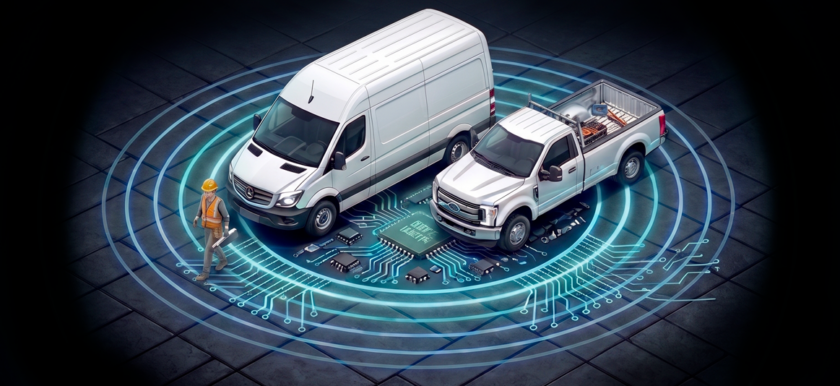




Managing a commercial fleet comes with a demanding balancing act: keeping drivers efficient while protecting high-value assets, cargo, and equipment. From delivery vans making dozens of stops daily to service utility trucks loaded with specialized tools, standard keys and passive tracking are no longer enough to mitigate modern risks.
Implementing advanced fleet vehicle security and proximity access bridges the gap between driver convenience and active theft prevention. By automating security routines and integrating real-time proximity logic into telematics, fleet operators can prevent vehicle theft, reduce unnecessary idling, and safeguard their bottom line.
The Vulnerabilities of Traditional Fleet Access
Traditional fleet security often relies on manual driver behavior: remembering to pull keys, lock doors at every drop, and set manual kill switches. In fast-paced operational environments, these manual habits frequently fail, leading to significant vulnerabilities:
- Opportunistic Theft: Leaving vehicles running or unlocked during quick deliveries makes them prime targets for roll-away theft or unauthorized joyriding.
- Relay Attacks & Signal Interception: Modern electronic keys can be intercepted by thieves using relay technology.
- Unattended Cargo Breaches: Drivers stepping away to complete paperwork or make a delivery leave rear compartments exposed to theft.
- Excessive Fuel Waste: Vehicles left idling unattended inflate fuel costs and increase engine wear.
Solving these challenges requires intelligent vehicle automation that operates independently of driver memory.
How Smart Proximity Detection Enhances Operations
True proximity-based fleet access relies on dual-band communication—combining Low Frequency (LF) perimeter detection with high-speed Radio Frequency (RF) location tracking.
When a driver approaches the vehicle with an authorized fob, the system recognizes their presence and automatically unlocks the cab. The moment the driver steps outside the designated perimeter, the vehicle instantly locks, secures cargo compartments, and activates defensive protocols.
+-------------------------------------------------------------------+
|                     Intelligent Driver Presence                   |
|                                                                   |
|   [ Authorized Fob Approaches ]  -->  [ Auto-Unlock / Arm Drive ] |
|   [ Driver Steps Outside Zone ]  -->  [ Auto-Lock / Lock Shifter] |
|   [ Unauthorized Intrusion ]     -->  [ Telematics Alarm Trigger] |
+-------------------------------------------------------------------+
1. Hands-Free Walk-Up and Walk-Away Control
Eliminating the need to physically fumble with keys or fobs saves crucial seconds on every stop. More importantly, it guarantees that a cab is never left unlocked when the driver walks away.
2. Hardware Shifter Interlock & Anti-Theft
A vital layer of fleet vehicle security and proximity access is active hardware immobilization. A physical shifter interlock prevents shifting the transmission into Drive or engaging the throttle unless a verified driver fob is inside the cabin. If an unauthorized person enters an idling vehicle, the vehicle remains immobilized, instantly triggering theft alerts.
Integrating Proximity Logic with Telematics
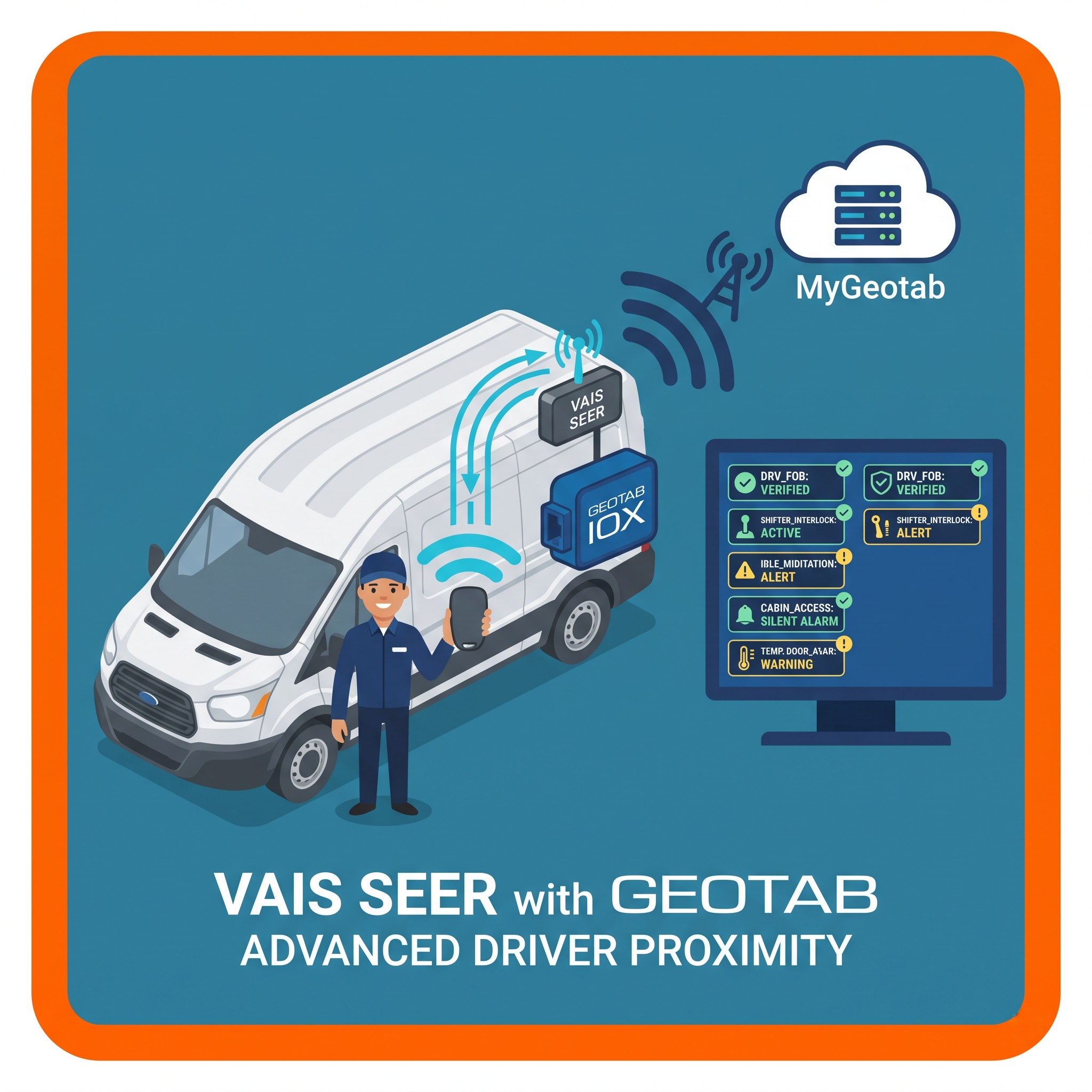
While traditional telematics systems provide passive GPS tracking and historical data, pairing them with an intelligent hardware engine turns telematics into an active intervention platform.
By utilizing an advanced smart proximity and security engine for fleet operations, fleet managers can feed real-time hardware telemetry directly into platforms like Geotab or custom fleet software:
- Ghost Drive & Movement Alerts: Get instant notifications if a vehicle moves or shifts gear without an authorized driver detected in the seat.
- Unattended Idle Mitigation: Trigger automated alerts to dispatch if an engine idles with no operator in proximity for longer than configured limits.
- Cold-Chain & Cargo Protection: Monitor walk-away distances; if a temperature-controlled door remains open while the driver moves beyond 15 feet, the system sounds a buzzer and alerts dispatch.
- Active Camera Pairing: Instead of dashcams merely recording incidents, proximity engine integration cross-references cabin breaches against fob presence to verify active theft in progress.
- Lone Worker Safety Automation: Automatically verifies driver presence to trigger urgent welfare checks if a remote worker is out of range.
Key Benefits for Commercial Fleets
Implementing automated proximity security delivers tangible ROI across multiple departments:
| Operational Challenge | Traditional Solution | Proximity & Security Engine |
| Cab / Cargo Security | Manual key locking (frequently forgotten) | Hands-free walk-away auto-locking |
| Vehicle Hijacking | Post-theft GPS recovery | Physical shifter interlock immobilization |
| Unattended Idling | Broad policy reminders | Automated dispatch alerts when driver leaves zone |
| Worker Safety | Manual check-in calls | Automated lone-worker out-of-range detection |
Summary: Upgrade Your Fleet’s Defense
Securing modern commercial fleets requires solutions that work seamlessly alongside drivers. Upgrading your vehicles with intelligent fleet vehicle security and proximity access prevents opportunistic theft, protects valuable equipment, and optimizes daily operations without adding administrative friction.
Explore how the Smart Proximity & Security Engine for Fleet by VAIS Technology delivers customizable, standalone, and telematics-integrated protection for commercial vehicles.
Categories: Uncategorized